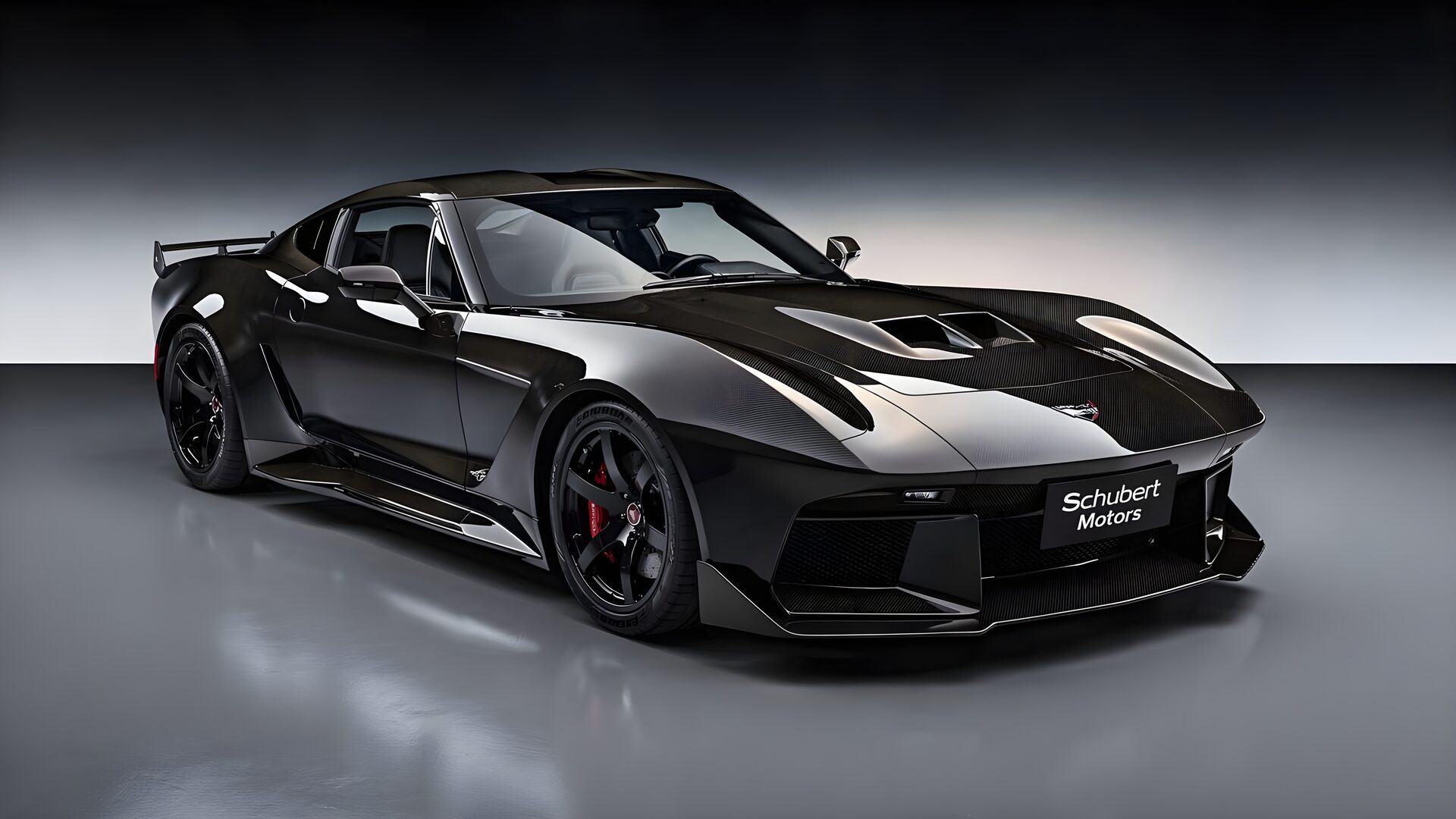
Deep Dive: The Schubox V-2 Axial Flux Motor and Why It Changes Everything
A technical overview of the Schubox V-2 axial flux motor used in the Cyclotis. 500 hp per corner, torque response measured in single-digit milliseconds, and a power density that makes conventional radial motors look like they're standing still.
Conventional radial flux motors — the kind found in virtually every EV on the market today — pass magnetic flux radially through a rotor cylinder. Axial flux motors flip that geometry: flux travels axially, parallel to the rotation axis, across pancake-shaped rotors sandwiched between stator discs. The result is a motor that produces significantly more torque per kilogram of mass. In the Schubox V-2, that advantage translates to 500 hp per corner at a weight of 38 kilograms per unit.
Each Schubox V-2 is independently controlled by Schubert's proprietary torque-vectoring firmware, which samples wheel speed, yaw rate, lateral acceleration, and driver inputs at 10 kHz. The result is per-wheel torque authority that can shift 100% of available power to any single corner in under 10 milliseconds — faster than any mechanical limited-slip differential by two orders of magnitude. In Caccia (Hunt) mode, the system maximizes individual-corner thrust during acceleration and applies counter-torque to inside wheels during cornering for rotation on demand.
The thermal challenge in packaging four high-power motors inside a hypercar chassis is non-trivial. Each Schubox V-2 unit is liquid-cooled via a dedicated loop that integrates with the Cyclotis's central thermal management system. Under sustained track conditions, the motors remain within their operating window indefinitely — there is no derating timer of the kind that afflicts production EVs under race conditions. That was a non-negotiable design requirement. A Schubert car does not slow down because it is hot.
This article is PLACEHOLDER content. Replace with real editorial before public launch.
Share This Article